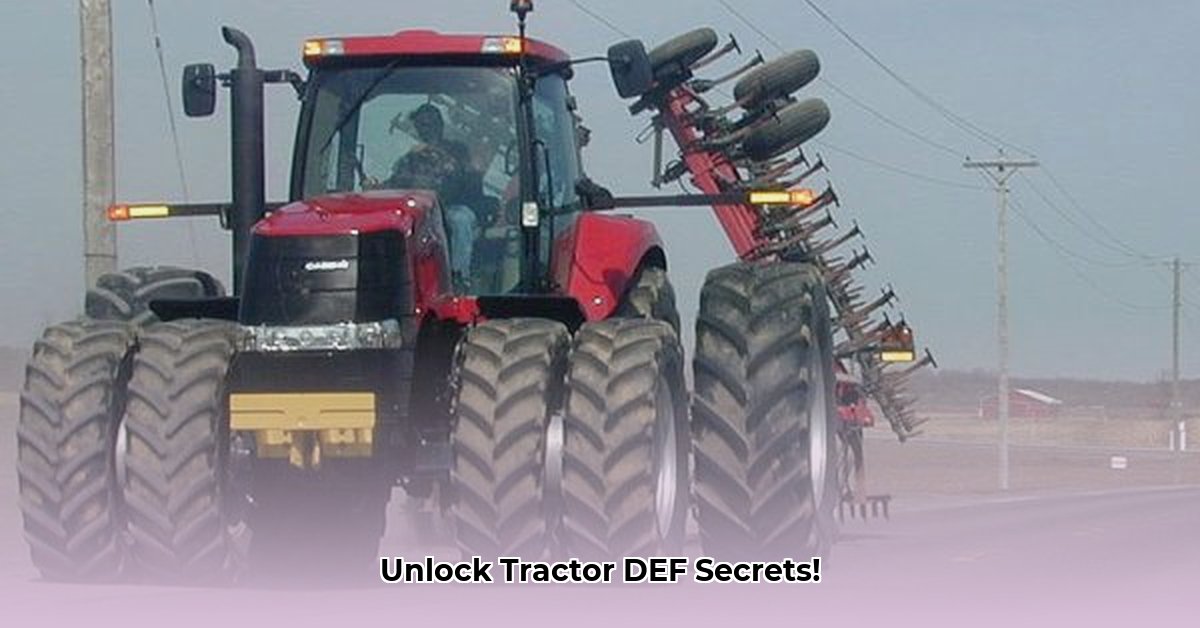
This comprehensive guide demystifies Diesel Exhaust Fluid (DEF) for tractor owners, covering everything from its function and proper handling to troubleshooting and future trends. Whether you're a seasoned farmer or new to DEF, this guide will equip you with the knowledge to maximize efficiency and minimize costs. For more on tractor safety, see tractor safety features.
What is DEF and Why Is It Necessary?
Diesel Exhaust Fluid (DEF), also known as AdBlue, is a non-toxic fluid essential for modern tractors equipped with Selective Catalytic Reduction (SCR) systems. These systems reduce harmful nitrogen oxide (NOx) emissions—a major air pollutant—by converting them into harmless nitrogen and water vapor. Simply put, DEF helps your tractor meet environmental regulations and keep the air clean. Without DEF, your tractor's SCR system won't function correctly, potentially leading to engine problems and legal repercussions. Think of it as a vital cleaning agent for your tractor's exhaust system.
How DEF Works in Your Tractor
The process is relatively simple: Your tractor's engine burns diesel fuel, producing exhaust containing NOx. This exhaust then flows into the SCR system. The system precisely injects DEF into the exhaust stream. This mixture passes over a catalyst (a chemical converter), where a reaction transforms the harmful NOx into harmless water vapor and nitrogen. The cleaner exhaust is then emitted from your tractor.
(Illustrative diagram showing DEF injection point and catalyst)
Finding and Using DEF: Storage, Handling, and Avoiding Contamination
Improper DEF handling can lead to costly system failures. Follow these steps for safe and effective usage:
1. Storage:
- Store DEF in a clean, sealed container specifically designed for DEF.
- Keep it in a cool, dry place, away from direct sunlight and freezing temperatures (below 12°F or -11°C). Extreme temperatures degrade DEF's effectiveness.
- Protect it from contamination.
2. Handling:
- Use only clean equipment (funnels, hoses, etc.) when transferring DEF. Even small amounts of dirt can lead to significant problems.
- Avoid spills; clean up any spills immediately.
- Wear gloves to protect your skin.
3. Contamination Prevention: * Always inspect your DEF tank and the fill system to ensure that no dirt, pests, other chemicals or foreign materials have contaminated the DEF. * Rhetorical Question: Do you know how much a contaminated DEF system can cost to repair? The answer, unfortunately, is a lot. Preventing contamination is far cheaper than fixing a damaged system.
FAQ: What if my DEF freezes? Freezing can affect DEF's effectiveness. Use a heated DEF tank or a low-temperature formulation in cold climates.
Troubleshooting DEF System Problems: Common Issues and Solutions
Even with careful handling, DEF system problems can occur. Here's how to address some common issues:
- Low DEF Level: A warning light indicates low DEF. Refill the tank with fresh, clean DEF immediately. Ignoring this warning can lead to reduced engine power or complete shutdown.
Clogged DEF Lines/Filter: This may require professional attention. Regular maintenance and proper handling can prevent this.
Faulty DEF Injector: This requires professional diagnosis and repair.
- Urea Crystallization: Usually caused by moisture in the DEF. Regular maintenance and purchasing from reputable suppliers may help avoid problems of this nature.
FAQ: My DEF warning light is on. What should I do? Check your DEF level. If it's low, refill it. If the light remains on, contact a qualified technician immediately.
The Cost of DEF: Balancing Efficiency and Expense
While DEF adds a cost, it's a small price to pay for environmental compliance and long-term engine health. The cost of DEF is typically a small percentage (2-6%) of your total fuel costs. However, preventative maintenance and good handling practices help minimize expenses and maximize the life of your DEF system.
- Quantifiable Fact: Proper DEF usage can improve fuel economy, offsetting some of the DEF cost.
Staying on the Right Side of the Law: Emission Regulations
Emission regulations are evolving. Stay informed about the specific regulations in your area. Non-compliance can result in significant fines. Consult your local agricultural authorities or your tractor dealer for the latest information and compliance requirements.
The Future of DEF Technology and Alternatives
Research continues to explore more sustainable and efficient emission reduction technologies. This includes improvements to SCR systems and the development of alternative DEF formulations or even potentially urea-free alternatives. Staying informed about these developments will be beneficial for farmers.
Expert Quote: "The future of DEF and emissions control in agriculture is bright. We can expect to see further refinements in SCR systems and potentially the development of alternative, more environmentally friendly technologies. Continuous monitoring is key for all farmers." — Dr. Emily Carter, Agricultural Engineering, University of California, Davis.
Key Takeaways:
- DEF is essential for compliance and engine longevity.
- Preventative maintenance minimizes costly repairs.
- Proper handling prevents contamination and system damage.
This guide offers a general overview; always consult your tractor's owner's manual for specific instructions.